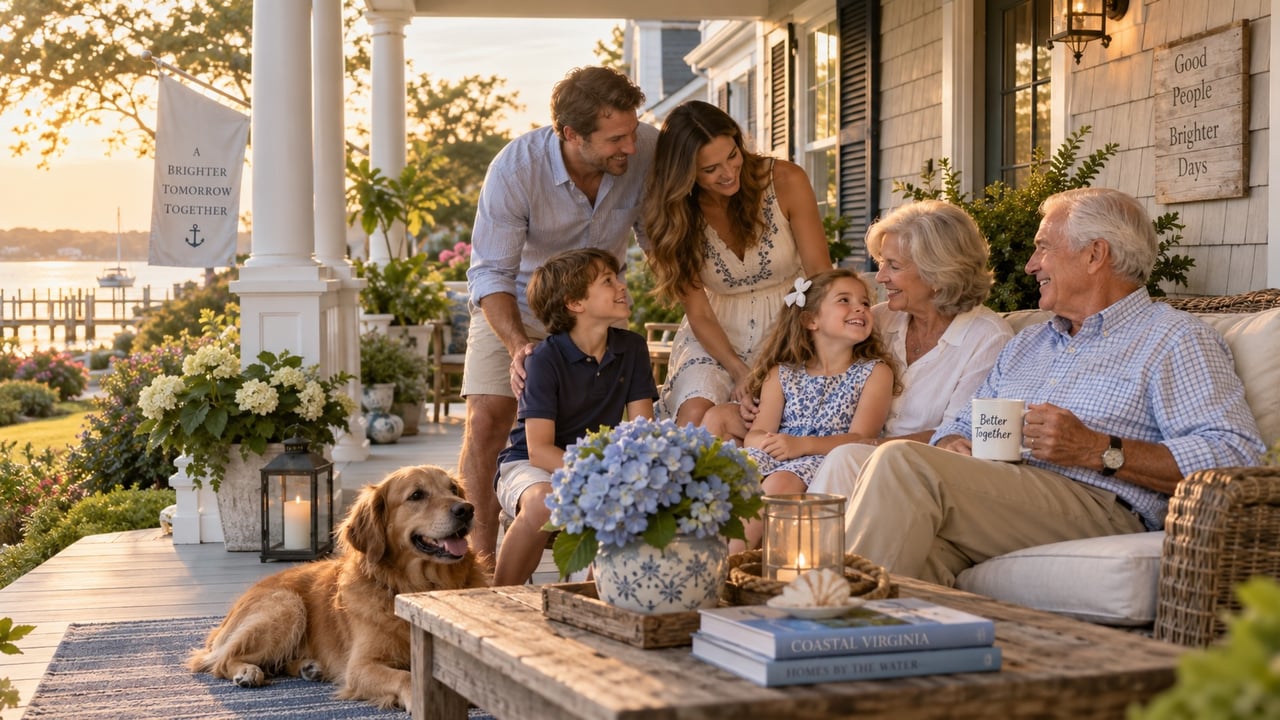
More families in Coastal Virginia are living together across generations than at any point in recent memory, and the reasons behind that shift are as varied as the families themselves. Aging parents moving in with adult children, adult children moving back home to save for their own future, extended families choosing to share space to support one another, and military families in particular navigating shifting caregiving responsibilities are all part of the picture. If your family is considering the multi-generational path, buying a home that actually works for it is a very different exercise than buying a standard single-family home. Here is a practical look at what to know about buying a multi-generational home in Coastal Virginia.
The first question worth answering is what kind of multi-generational setup you actually need. Some families want fully separate living quarters with private entrances, kitchens, and living rooms, essentially two homes under one roof. Others need a spacious guest suite with a private bathroom but shared common areas. Others want a detached guest house or accessory dwelling unit on the same property. Each of these requires a different type of home, and the more specific you can be about what your family needs, the more effectively you can search. Talk openly with everyone who will live in the home before you start touring, because the wrong assumption in one direction or the other creates unhappy household dynamics down the road.
Coastal Virginia has more multi-generational housing stock than many buyers realize, and knowing where to look makes a real difference. Chesapeake, Suffolk, and parts of Virginia Beach offer larger homes with finished basements or bonus rooms that can be adapted into private living quarters. Newport News and Hampton have older brick homes on generous lots that often include separate entrances or dedicated in-law wings. Newer construction across the region, especially in some of the Suffolk and Chesapeake developments, is increasingly offering purpose-built dual master layouts and first-floor guest suites specifically designed for multi-generational living. Waterfront and larger lot properties in Great Bridge, the Peninsula, and even parts of the OBX sometimes include separate guest cottages or carriage houses that work beautifully for extended family setups.
Accessibility deserves special attention in multi-generational buying, especially when aging parents will be part of the household. First-floor primary suites, walk-in showers, minimal stairs, wide doorways, and single-level layouts are all worth prioritizing if any household member has current or anticipated mobility considerations. Look at how the property flows in real life, not just in listing photos. A stunning home with the main living areas up a full flight of stairs may not be workable for a household with an elderly parent, no matter how beautiful it looks otherwise. Small design details matter more here than they do in most home searches.
Financing a multi-generational home works largely the same as any single-family home purchase, but there are some specific considerations worth knowing. Most multi-generational setups still qualify for standard conventional, FHA, or VA loans, since the home is legally a single-family residence even with two functional living areas. If the home has been divided into legally separate units, however, it may be classified as multi-family and require investment property financing, which typically involves higher down payments and interest rates. Ask your lender specifically how the home you are considering will be classified, since this can affect everything from your loan type to your insurance to your property taxes. FHA offers some flexibility around income counting from household members that can help multi-generational buyers qualify for more house.
There are also some practical realities of multi-generational living worth naming. Successful multi-generational households usually come down to clear expectations, respected privacy, and thoughtful shared space design. When touring homes, think about noise between living areas, how meal times will actually work, where each generation will spend time when they want to be alone, and whether the home can handle inevitable holidays and gatherings when everyone plus guests are all under one roof. The best multi-generational homes are ones where each generation has real space to be themselves, and the shared spaces feel spacious enough to bring everyone together comfortably.
Buying a multi-generational home is a meaningful family decision, and it deserves thoughtful planning across everyone who will be part of the household. Our Thrive Realty agents help families navigate multi-generational purchases across Coastal Virginia regularly, and we know how to look for the specific features and layouts that actually work for these households. Whenever your family is ready to start exploring, we would love to be part of the conversation.