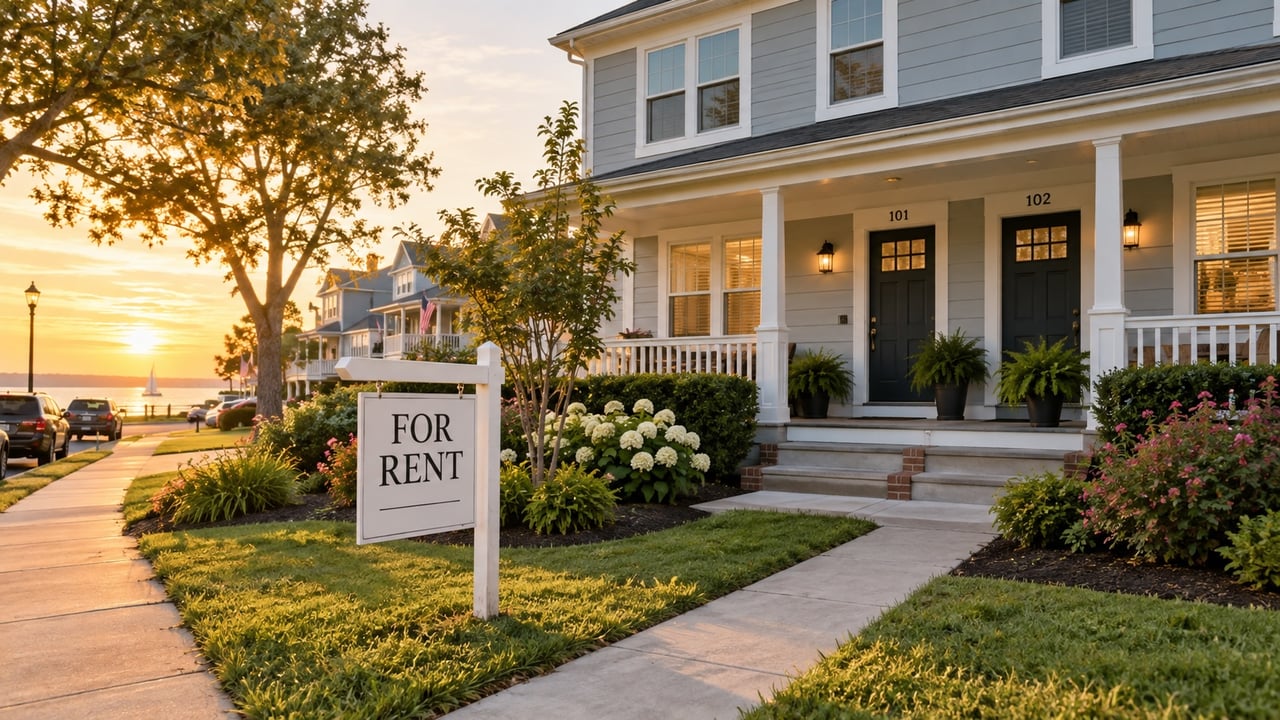
If you have been quietly wondering whether buying an investment property in Coastal Virginia or Coastal NC could be right for you, you are not alone. The 757 and the surrounding coastal markets offer some genuinely compelling investment fundamentals: a large and consistent military population that drives long-term rental demand, a thriving vacation rental market on the Outer Banks and Virginia Beach oceanfront, and price points that still make cash flow math workable in many neighborhoods. But investment property is its own kind of decision, and the difference between a great investment and a stressful one is usually the homework you did before you bought. Here is an honest look at what to know.
Start by understanding the two main paths, because they are meaningfully different. A long-term rental property is a home you buy and rent to a tenant for a year or longer at a time, usually a single family home, townhome, condo, or small multi-unit property. A short-term or vacation rental is a home you buy and rent to travelers by the night or week, typically through platforms like Airbnb, Vrbo, or a local property manager. Long-term rentals tend to produce steadier income with less operational work. Short-term rentals can produce higher gross income but come with meaningfully more work, more variability, and more regulatory exposure. Deciding which model you actually want to run is the first step, because it shapes where you should be shopping.
For long-term rentals in Coastal Virginia, some of the strongest markets tend to be neighborhoods with steady demand from military families, medical professionals, students, and working families. Areas near Norfolk Naval Base, the Norfolk Naval Shipyard in Portsmouth, Naval Station Oceana in Virginia Beach, Langley Air Force Base in Hampton, and Fort Eustis in Newport News all attract consistent tenant demand. Chesapeake, parts of Norfolk, Hampton, and Newport News offer some of the best price-to-rent ratios in the region, meaning your monthly rent covers your mortgage and expenses more comfortably. Older homes in established neighborhoods can offer strong value, but factor real maintenance budgets into your math, since coastal homes wear differently than inland ones.
For short-term rentals, the Outer Banks is the classic answer, and towns like Corolla, Duck, Nags Head, and Kill Devil Hills each attract slightly different rental demographics. Corolla and Duck tend to draw higher-end weekly rental demand. Nags Head and Kill Devil Hills offer strong volume across a wider range of price points. Virginia Beach oceanfront and Sandbridge also produce meaningful short-term rental income, though with more seasonal variability than the OBX. Short-term rental buyers should talk to two or three local property managers before writing an offer on any property, get realistic income projections rather than optimistic ones, and understand both the property management cost (typically 15 to 25 percent of gross rental income) and the ongoing operational costs of running a vacation rental.
Financing an investment property works differently than financing a primary residence. Investment property loans typically require 20 to 25 percent down, carry higher interest rates than primary residence loans, and involve more rigorous underwriting. Lenders may or may not count projected rental income toward your qualification, depending on the loan type and your experience level. If you already own rental properties, that experience helps. If you are starting from zero, some lenders will require reserves showing you can cover the mortgage for several months without any rental income. Talk to a lender who actively finances investment properties in Coastal Virginia and Coastal NC, since local lenders often understand the specific rental markets better than national lenders do.
There are also coastal-specific considerations every investor should understand. Flood insurance is a real cost in many coastal rental markets and can significantly impact cash flow, especially on OBX properties and waterfront homes in the 757. Hurricane exposure means occasional weeks of lost rental income during and after storms. Salt air and humidity mean higher maintenance costs than inland investments. Short-term rental regulations vary by municipality, with some jurisdictions imposing occupancy limits, registration requirements, or restrictions in certain zones. Verify the specific rules for any property you are seriously considering before you write an offer, since a rule change or restriction can meaningfully affect your investment thesis.
Buying an investment property can be one of the smartest long-term financial moves you make, or one of the most stressful, depending largely on how thoughtfully you go in. Our Thrive Realty agents work with real estate investors across Coastal Virginia and Coastal NC every week, from first-time landlords to seasoned portfolio owners, and we would love to help you think through what path fits your goals. Whenever you are ready to run the numbers, we are here.