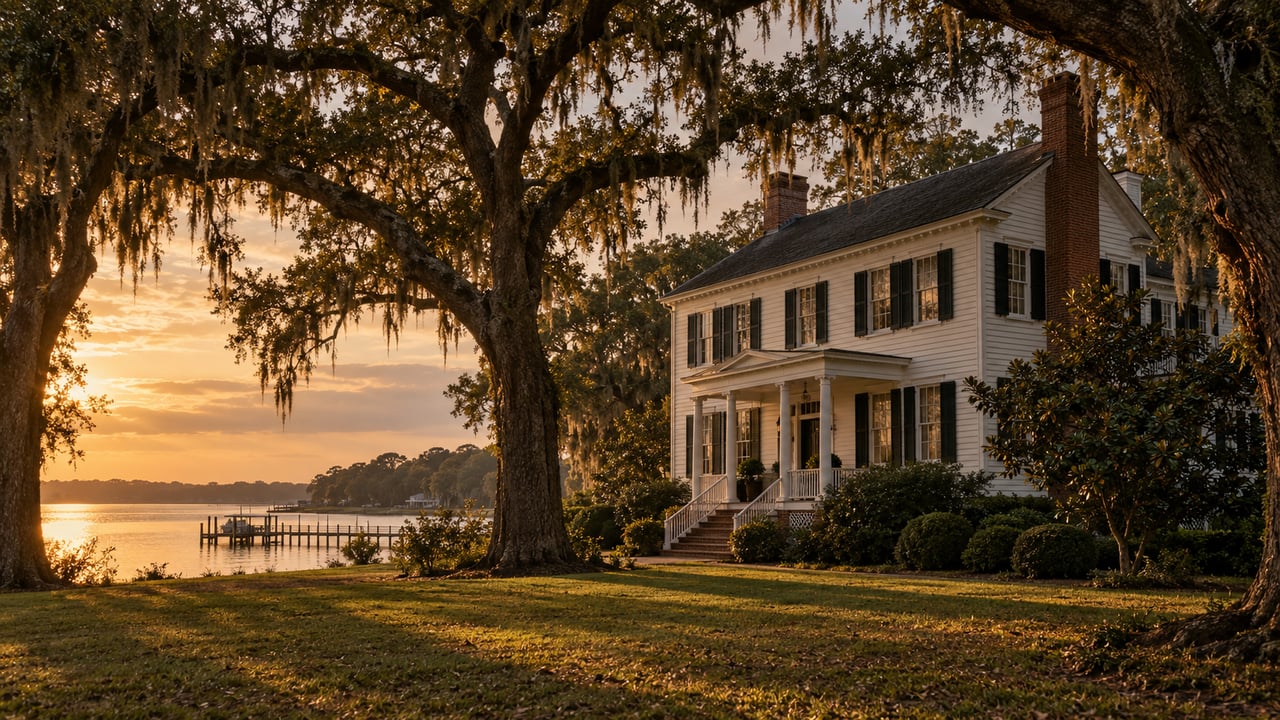
If you followed our story last week on Grace Sherwood, you already know that the shore of the Lynnhaven River in Virginia Beach carries more history than most people realize. Ferry Plantation House, tucked at the end of Cheswick Lane just off Independence Boulevard, is one of the most quietly remarkable historic landmarks in all of Coastal Virginia. Ferry Plantation House holds three hundred years of layered history on a single piece of shoreline, and the story of the property is as compelling as any historic site in the region. Here is what makes it worth knowing about.
The land that Ferry Plantation House stands on has been continuously used since the seventeenth century. In 1642, Adam Thoroughgood established one of the earliest ferry services in the Virginia colony here, using the plantation as a crossing point across the Lynnhaven River. That ferry gave the property its name, and it operated as the primary river crossing in the area for over a century. The land also became the site of Princess Anne County's second courthouse, which is where Grace Sherwood was tried for witchcraft in 1706, before being taken down to Witch Duck Point for her infamous trial by water. The land literally sits at the intersection of some of the most important early history of what would become Virginia Beach.
The current Ferry Plantation House was built in 1830, and it is actually the fourth house to stand on the property. Earlier homes were lost to fire and storms over the years. This 1830 house was built by Charles McIntosh in the Federal style, with hand-hewn beams, original plaster walls, and details that have survived remarkably well for nearly two centuries. The interior contains rooms furnished to reflect different eras of the property's use, and the property still includes original outbuildings, gardens, and a slave dwelling that has been carefully preserved as part of the effort to tell the full history of the place, including the parts that are difficult to face.
For a period in the twentieth century, Ferry Plantation House fell into serious disrepair and came close to being lost. A determined community effort in the 1980s and 1990s rescued it, restored it, and turned it into the historic site and museum it is today. It is now owned by the City of Virginia Beach and operated with the support of a dedicated volunteer organization, the Friends of Ferry Plantation House. The property hosts regular tours, seasonal events, educational programs for local schools, and a well-earned reputation for its ghost tours during the fall months, when the property's many layered histories seem especially close to the surface.
Ferry Plantation House also has a genuine reputation for the paranormal, and it has been featured in a number of ghost hunting shows and paranormal investigations over the years. Whether or not you believe in that side of things, the reasons Ferry Plantation feels haunted are honest ones. It was the site of witch trials. It saw generations of enslaved people work the land. It witnessed births, deaths, floods, fires, and the changing of an entire colony into a state and eventually a modern city. Any place that has held that much life, over that many centuries, carries a certain weight. Ferry Plantation House holds it with dignity.
For anyone who lives in Virginia Beach, or is considering a move here, visiting Ferry Plantation House is one of the best hour-long experiences the city has to offer. It gives you a sense of place that no drive down Independence Boulevard can convey. It connects you to the story of Grace Sherwood in a way that a road name alone cannot. And it reminds you that the community you are part of, or thinking of joining, has been here longer than most of the country. Public tours are available on a seasonal schedule, and the annual events calendar is worth checking, especially in October when the property really comes into its own.
Our Thrive Realty team lives and works in these Virginia Beach neighborhoods every day, and we love being part of a community with this much history running through it. Ferry Plantation House is one of those places every Coastal Virginian should visit at least once, and probably more. Watch for the next local history spotlight coming, which will take us to another corner of the region worth knowing about.