Tucked away on Parish Road in Virginia Beach, near the Lynnhaven River and only a few miles from the sites we have already explored in this series, sits one of the most remarkable buildings in the entire country. The Adam Thoroughgood House is not just one of the oldest brick homes in English North America. It is a direct connection to the earliest decades of English colonization in Virginia, and the family story that stands behind it is woven into the same threads of Coastal Virginia history that run through Ferry Plantation House and the Grace Sherwood story we have told in recent weeks. If you have never visited, this week's local history spotlight is for you.
The story starts with Adam Thoroughgood himself, who arrived in Virginia in 1621 as a seventeen-year-old indentured servant. By the time he had worked off his indenture a few years later, he had already shown the kind of ambition that would define his career. He returned briefly to England, married Sarah Offley from a well-connected English family, and brought her back to Virginia in 1628. The Thoroughgoods became one of the most prominent early families in what was then New Norfolk County, which included the land that would eventually become Virginia Beach, Norfolk, Chesapeake, and Portsmouth. Adam Thoroughgood served in the Virginia House of Burgesses, received a massive 5,350-acre land grant from the colonial government, and effectively helped shape the early European settlement of this stretch of the Chesapeake Bay region.
The house that bears his name was most likely built by his descendants rather than by Adam himself, who died in 1640 at the age of thirty-six. For many years, local tradition dated the house to around 1636, which would make it one of the oldest surviving buildings in the English Americas. More recent historical and architectural research has pushed the construction date forward to roughly 1719, which is still remarkable, placing it among the earliest surviving brick homes in Virginia. The house was built by Argoll Thoroughgood, a grandson of Adam, on part of the original Thoroughgood land grant. The exact dating has become a matter of scholarly debate, but the significance of the building itself is not in question.
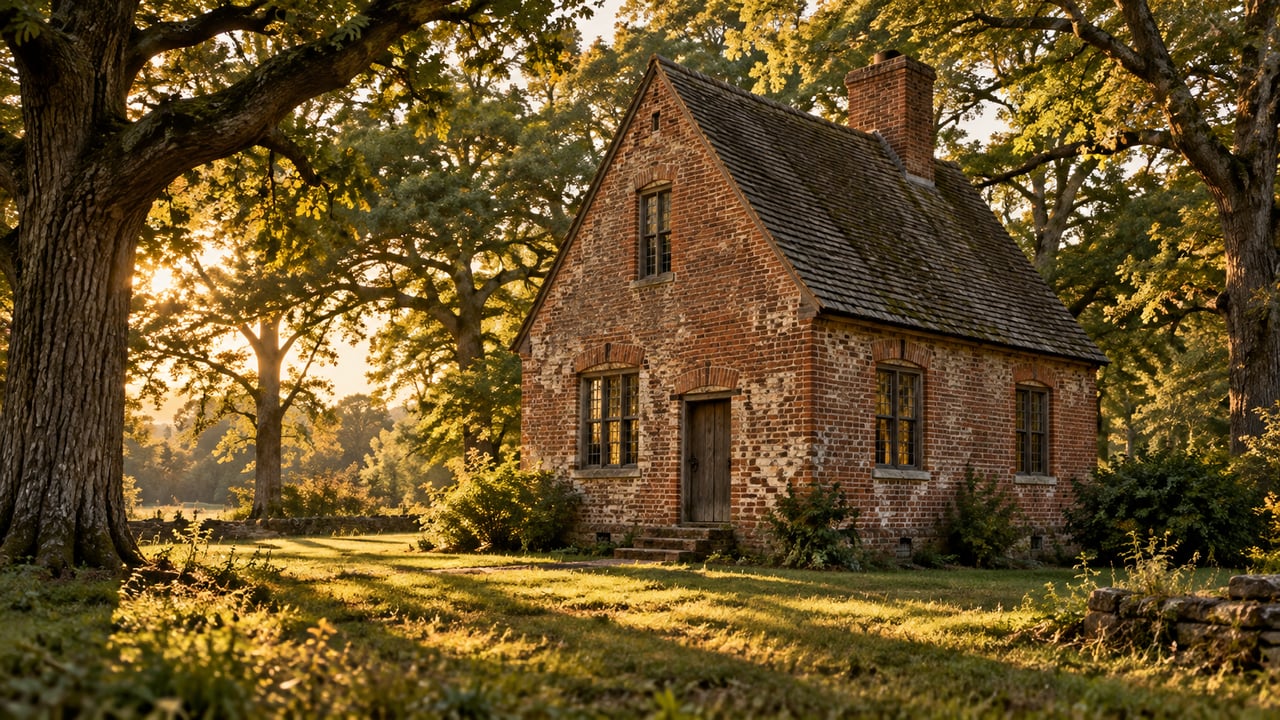
The architecture of the Adam Thoroughgood House is quietly remarkable. It is built in a style that reflects the English medieval tradition more than the Georgian architecture that would come to dominate colonial America. Small windows, steep gabled roofs, massive chimneys at either end, and brick construction in Flemish bond patterns all speak to a specific moment in colonial building. Inside, the home is simple and small by modern standards, with just a few rooms arranged in a layout that reflects how colonial families actually lived three centuries ago. Walking through it today is a direct experience of how different everyday life was in early colonial Virginia, and how much we take modern conveniences for granted.
The property fell out of family hands over the centuries and passed through various owners before being acquired and preserved by the Chrysler Museum, and later transferred to the City of Virginia Beach. Today, the Adam Thoroughgood House is operated as a historic site and museum, with public tours, educational programs, and seasonal events. The grounds include preserved gardens, interpretive signage, and the house itself, which has been painstakingly maintained to reflect how it would have looked in the early eighteenth century. The site is small but genuinely significant, and visiting it gives you a sense of early Virginia Beach that cannot be experienced anywhere else.
The Thoroughgood story also connects directly to other sites we have featured in this series. Adam Thoroughgood established the first ferry crossing on the Lynnhaven River in 1642, giving Ferry Plantation its original purpose and name. His descendants were part of the same Princess Anne County community that put Grace Sherwood on trial in 1706. The Thoroughgood land grant covered territory that includes much of modern Virginia Beach. If you want to understand how Virginia Beach came to exist as a place, the Thoroughgood family story is one of the essential threads, and the house that bears his name is one of the few physical connections to that era that still stands.
Our Thrive Realty team lives and works in these Virginia Beach neighborhoods every day, and we love being part of a community where sites like the Adam Thoroughgood House sit quietly on ordinary streets. If you have never visited, add it to your list. It takes less than an hour, costs almost nothing, and leaves you with a different understanding of the place we all call home. Watch for the next local history spotlight coming, which will take us to another corner of Coastal Virginia worth knowing about.