If you drive west out of Chesapeake toward Suffolk, or south out of Suffolk toward the North Carolina line, you eventually find yourself at the edge of one of the most historically significant landscapes in the entire United States. The Great Dismal Swamp sprawls across more than a hundred thousand acres of Coastal Virginia and northeastern North Carolina, and most people who live in the 757 have driven past its edges hundreds of times without ever really understanding what they are passing. The story of the Great Dismal Swamp is a story of American freedom, of colonial ambition, of resilience in the face of unimaginable circumstances, and of one of the great natural landscapes on the East Coast. This week’s local history spotlight takes us into one of our region’s most important and least understood places.
The Dismal Swamp was known to the Indigenous peoples of this region for thousands of years before European colonization. It was a source of food, medicine, and refuge, and a place that carried spiritual significance. European colonists first encountered the swamp in the early seventeenth century and quickly dismissed it as useless, which is where the name “Dismal” originated. It was considered an obstacle to development, a dangerous and impassable wilderness, and a place that stood in the way of commerce. That assessment changed over time, but the name stuck.
George Washington himself was one of the first colonial figures to try to profit from the swamp. In 1763, he and several business partners formed the Dismal Swamp Company with the goal of draining the swamp for agriculture and harvesting its timber. Washington personally surveyed portions of the swamp and remained involved in the company for decades. The Dismal Swamp Canal, which was first dug by hand (much of it by enslaved laborers) between 1793 and 1805, became one of the oldest continuously operated artificial waterways in the United States. It is still navigable today and remains a working piece of the Intracoastal Waterway, connecting the Chesapeake Bay to Albemarle Sound.
The most profound and least widely known chapter of the Great Dismal Swamp’s history, however, is its role in the Underground Railroad. For generations before the Civil War, enslaved people who escaped from plantations across Virginia and North Carolina fled into the swamp and built permanent communities deep in its interior. These communities, whose members are now known collectively as the “Great Dismal Swamp maroons,” lived in the swamp sometimes for decades at a time, raising children, building homes on high ground, and establishing an independent existence beyond the reach of slave patrols. Archaeological research led by Dr. Daniel Sayers of American University has uncovered evidence of long-term maroon settlements throughout the swamp interior, and the story has only been fully told to broader audiences in recent decades. The Great Dismal Swamp was, in a very real sense, one of the largest and longest-standing refuges for escaped enslaved people anywhere in the pre-Civil War United States.
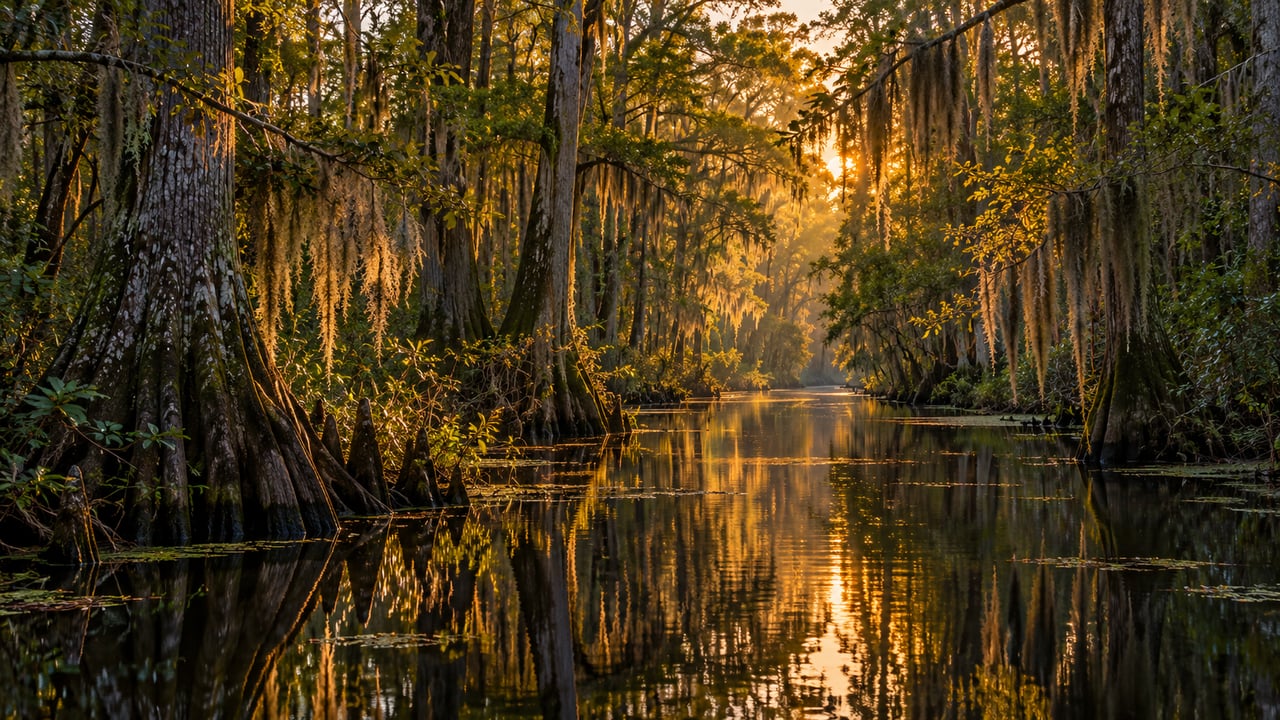
Today the swamp is protected as the Great Dismal Swamp National Wildlife Refuge, covering about 112,000 acres across both Virginia and North Carolina. It is home to black bears, bobcats, otters, deer, more than 200 bird species, and some of the last old-growth cypress and Atlantic white cedar forests in the region. Lake Drummond, the roughly 3,100-acre natural lake at the heart of the swamp, is one of only two natural lakes in all of Virginia. Public access points include the Washington Ditch and Jericho Lane entrances on the Virginia side, with hiking trails, kayak access, and biking trails that let visitors experience the swamp directly. The Dismal Swamp Canal State Park in North Carolina offers a visitor center, boat ramps, and walking paths along the historic canal.
For anyone who lives in Coastal Virginia or Coastal NC, visiting the Great Dismal Swamp is one of the most meaningful outdoor experiences our region has to offer. It is a place that holds the weight of American history in a way that few other landscapes still do. It is a place where the natural beauty is genuinely remarkable and where the human stories are even more so. The maroons who lived in the swamp interior, often for generations, built lives of freedom in a landscape that others had written off as useless. That story deserves to be known, and the land that preserved them is still here for us to walk through today.
Our Thrive Realty team lives and works across Coastal Virginia and Coastal NC every day, and we love being part of a region with this much history running through its landscape. The Great Dismal Swamp is one of those places every Coastal Virginian and Coastal NC resident should visit at least once. Watch for the next local history spotlight coming, which will take us to another corner of our region worth knowing about.